What’s exciting about being a UX Designer in an industrial company is the variety of tasks. I was recently introduced to machine interfaces on production lines and was surprised by how inconsistent and outdated they look. I can see why — they are not only from different manufacturers, but also from different generations.
In this article, I want to explore the reasons behind the current state of HMIs and share some thoughts on how to make them better.
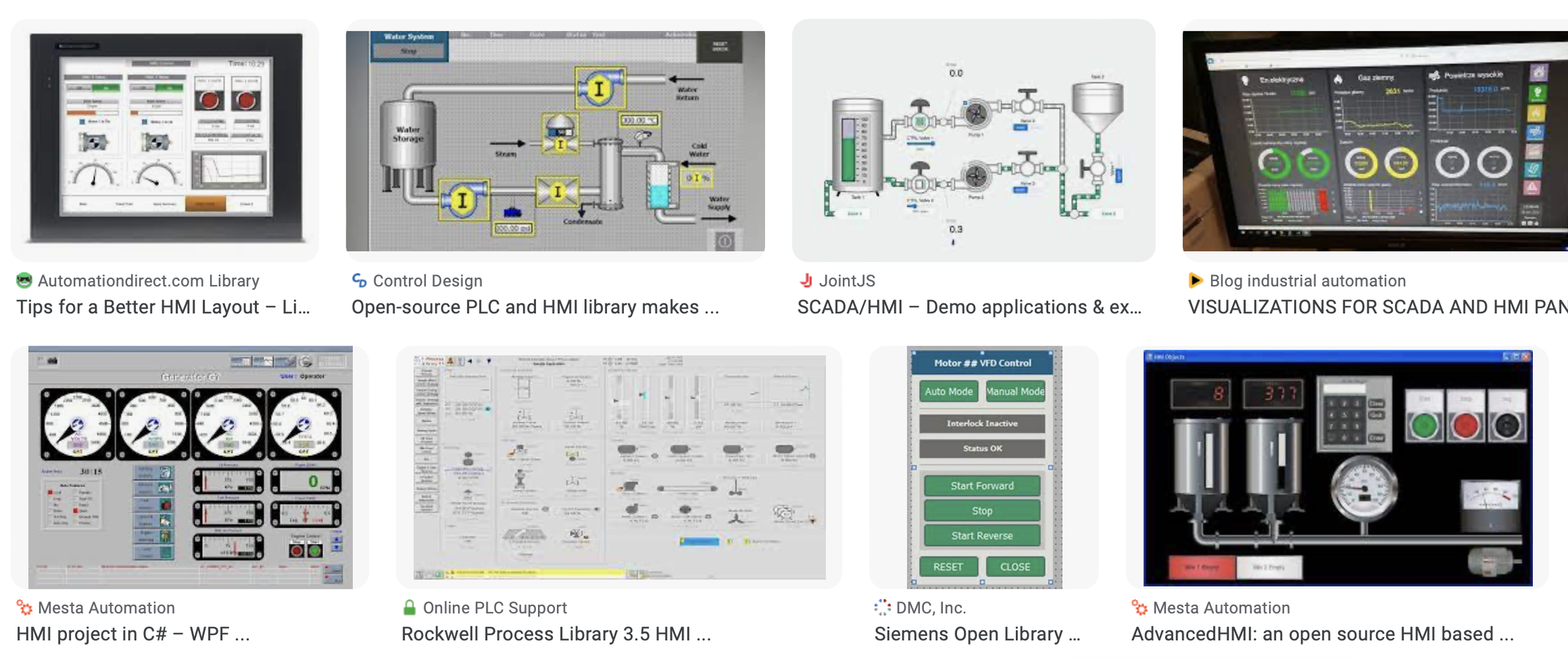
Why HMI interfaces are so different
As someone more familiar with digital interfaces for the web and mobile, I can speculate on where HMI issues might lie.
- Remote control mentality: Machine interfaces are treated more like remote controls than an important part of the machine, making them harder to use.
- Limited competition: Not many companies make these interfaces, so there’s no push to make them better.
- Few users, high impact of mistakes: These machines don’t have many users, but if something goes wrong, it’s a big deal. The more users a product has, the more bugs get found and fixed.
- Utility over user experience: Industries care more about making things work than making them easy to use.
- Well-trained users: Users are typically well-trained, compensating for less-than-ideal interface design.
- Challenges in updating: It’s hard to update these interfaces without stopping the whole production line.
What could we do about it
Don’t get me wrong — when I say HMIs are outdated, I don’t mean they should look like the iPhone interface. That would be overkill.
But I do see value in unifying HMI interfaces. A unified HMI design system for large OEMs could be a starting point. Imagine a common design system similar to Google’s Material Design, but adapted to the HMI context — this could greatly improve HMIs in the future. An open-source design system could also bridge the gap between development tools and design software, allowing for faster iterations.
Benefits of a unified HMI design system
- Uniform interfaces help users adapt faster.
- Consistency reduces the likelihood of errors, enhancing overall safety.
- Inclusive design supports users of all abilities.
- Shared design elements make development and fixes more cost-effective.
- A cohesive look brings a touch of modernity to these machines.
- A unified style simplifies the incorporation of new features.
Conclusion
These ideas may not be groundbreaking, but their implementation could meaningfully improve industrial HMI interfaces. A shared design system can make things safer, more efficient, and just nicer to look at.
As a UX designer working primarily with web and mobile devices, diving into the realm of human-machine interfaces is a new adventure for me. If you know of an existing HMI design system or want to share your thoughts, I’d love to hear them.